Rotational Pharmacomechanical Thrombectomy
Venturi Effect Mechanism: As the active tip spins within the vessel lumen, a hydrodynamic vortex forms, enabling targeted fragmentation and aspiration of the thrombus.
Drug Infusion Port: Concurrent infusion of anti-thrombolytic agents ensures cohesive mixing with the thrombus, expediting clot dissolution and clearance.
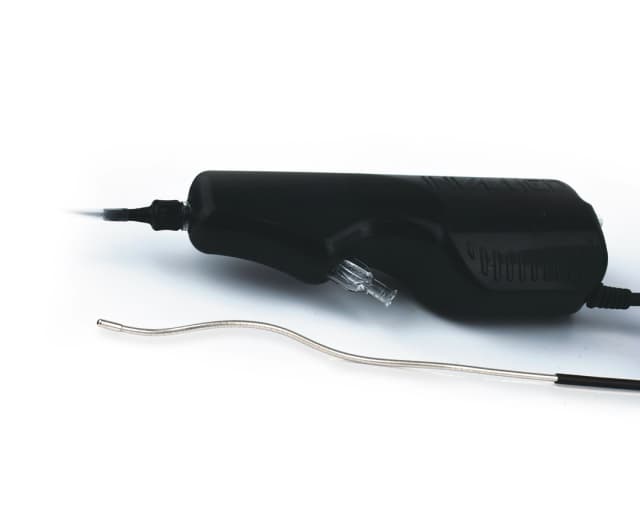
Active Tip with Coil & Sinusoidal Wave
Coil Design: The sinusoidal wave geometry, visible from the distal tip to proximal region, efficiently engages and fragments clot.
Preventing Distal Embolism: The rotational vortex action, combined with controlled drug release, helps retain clot particles in proximity for prompt removal, reducing the risk of distal migration.
Over-the-Wire (OTW) Catheter System
0.035” Guidewire Compatibility: Simplifies wire management in complex anatomies (including tortuous or large-diameter vessels).
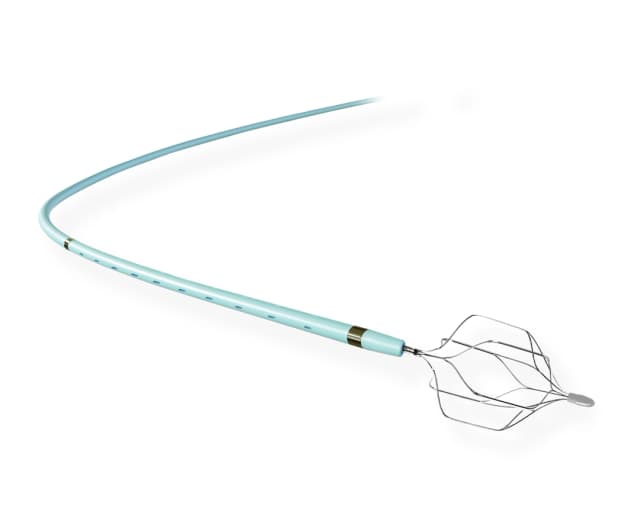
Catheter Lengths: With 90 cm and 110 cm functional lengths, and 120 cm or 135 cm profiles, the system accommodates an array of procedural approaches.
Multiple Catheter Profiles & Radiopacity
5.0F to 8.0F: Offers suitable sizing for broad vessel diameters in the peripheral venous circulation, pulmonary artery, or IVC.
Radiopaque: The braided shaft is visible under fluoroscopy from distal tip to proximal segment, aiding real-time device positioning.
PTFE Inner Lining
Low-Friction Catheter Lumen: Streamlines guidewire passage and drug infusion, helping avoid clot or tissue adherence to the catheter walls.
Reduced Shear Stress: Minimizes friction on vessel endothelium, supporting safer navigation in high-stakes procedures.