Advancement of the High Flexibility
- The catheter has a semi-rigid proximal shaft and a highly flexible distal shaft to facilitate the advancement of the catheter in the anatomy.
- The proximal end of the catheter incorporates a standard luer adapterwhich is compatible with DMSO to facilitate the attachment of accessories.
Flawless Visualization, Rigidity and Lubricity
- The catheter has a radiopaque marker at the distal end to facilitate fluoroscopic visualization.
- The outer surfaces of the catheter are coated to increase lubricity.
- The catheter is used to increase the rigidity of the distal section during introduction into the guiding catheter.
DMSO
Compatible
Proximal
Marker
Platinum
Distal Marker
Detachable
Tip
Pars Embolisation Catheter is the Neurovascular intervention that is use for the controlled selective infusion of physician-specified therapeutic agents such as embolization materials and of diagnostic materials such as contrast media to treat vascular diseases of the brain.
Pars offers the user the lowest available tip profile while providing unmatched burst and tensile strength, making it the ideal catheter for the treatment of Brain AVMs.
- Pars detachable tip: Special mechanism of detachment
- 2 distal radiopaque markers for safe injections: distal tip, detachment point, maximum reflux point
- Specifically designed for catheterization of small diameter, sinuous distal vessels
- DMSO & cyanoacrylate compatibility
We offer advanced solutions for the treatments of the following brain diseases:
- Intracerebral AVMs and AV fistulas
- Intracerebral aneurysms
- Intracranial stenosis
- Ischemic stroke and intracerebral thrombus
- Tumors
Low-Profile Distal Tip
- Distal Outer Diameter: 1.5F (inner) ensures minimal tip size, critical for navigating tortuous or narrow cerebral vasculature.
- Straight Tip Configuration: At 25 cm in length, the distal segment is optimized for consistent microcatheter placement and stable positioning during embolization.
High Burst Pressure & Tensile Strength
- 170 PSI Burst Tolerance (after one hour of plug-and-push technique): Maintains structural integrity under prolonged pressurization, enhancing reliability in Libro™ and other liquid embolic injections.
- Robust Proximal Shaft: A 2.7F proximal catheter profile with a stainless steel coil imparts pushability and high tensile strength, ensuring strong catheter handling and secure device removal.
Dual Reinforcement for Optimized Performance
- Nitinol Braiding (Distal): Reinforces kink resistance and mitigates lumen ovalization, vital for continuous flow and consistent microcatheter navigation.
- PTFE Liner (Hub to Tip): Supports low-friction guidewire movement, facilitating precise wire control and device exchanges.
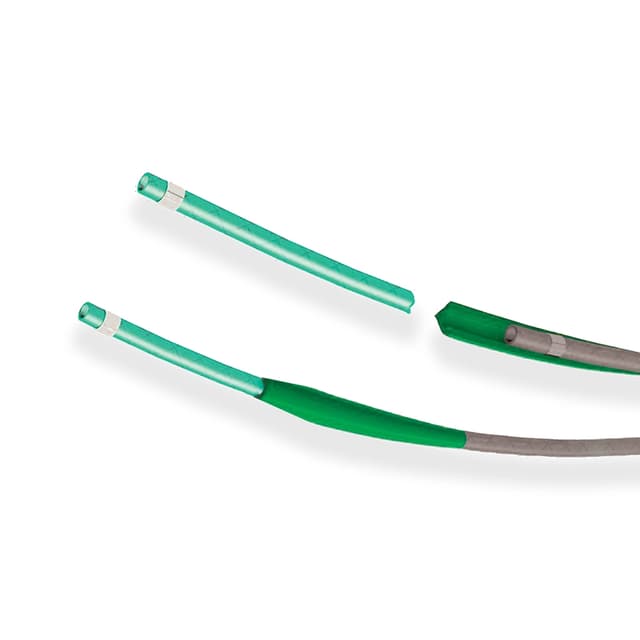
Detachable Tip Technology
- Reduced Entrapment Risk: Allows deliberate reflux with Libro™ LES while maintaining microcatheter patency, minimizing the challenge of trapped catheter tips.
- Maximum Embolic Penetration: Operators can permit measured reflux to achieve deeper lesion filling, then detach or retrieve the tip if needed.
Hydrophilic Coating
- Improved Navigability: Lowers friction in microvasculature, aiding the catheter’s progression through complex cerebral anatomy.
- Optimal Trackability: Facilitates smoother transitions during pathfinding and ensures stable deployment of embolic materials.