Mechanical thrombectomy is endovascular removal of large vessel occlusion clots causing acute ischemic stroke. A stent retriever or aspiration catheter captures and extracts the thrombus. Treatment window up to 24 hours.
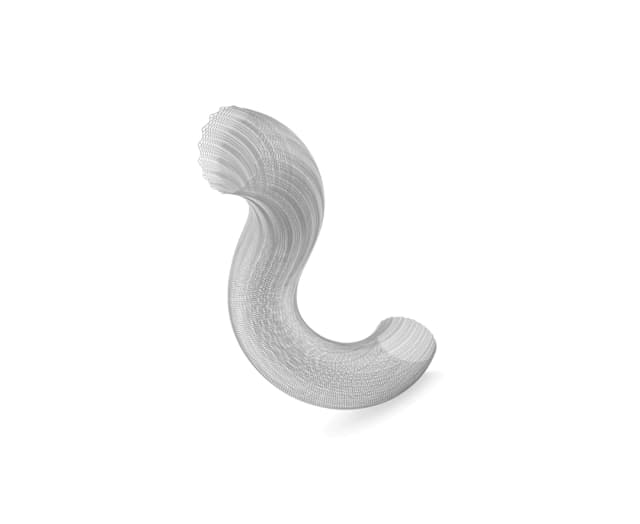
A flow diverter is a densely braided low-porosity stent deployed across the aneurysm neck. It redirects blood flow away from the sac while maintaining parent vessel patency. The aneurysm thromboses over time.
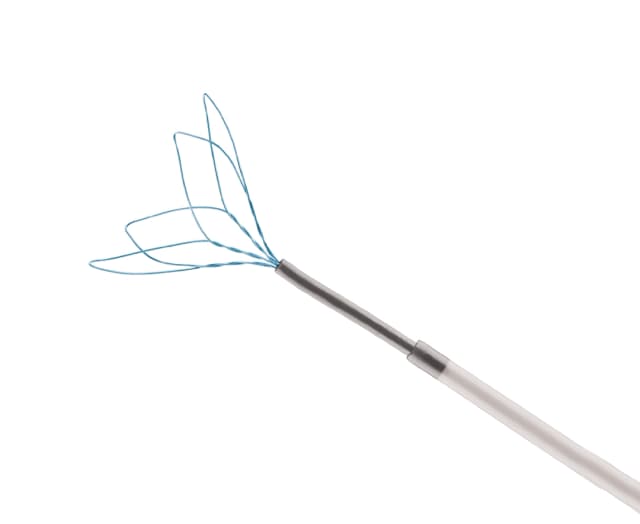
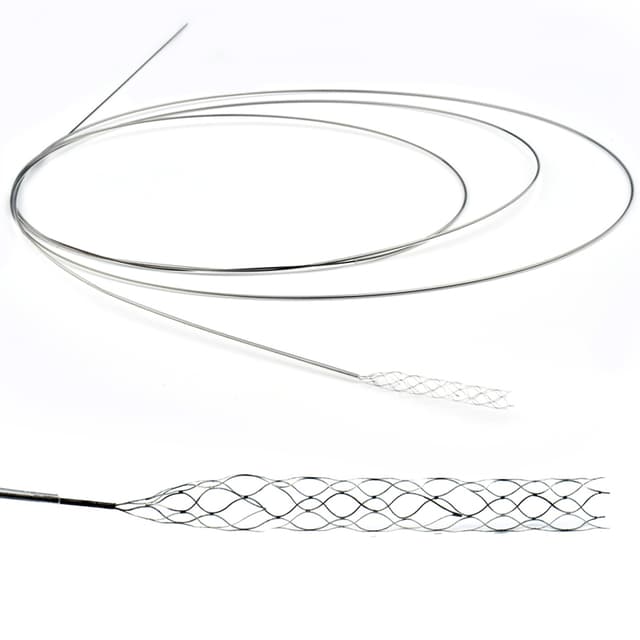
A stent retriever is deployed through a microcatheter across the clot. The self-expanding mesh integrates with the thrombus within minutes. The device is then withdrawn with the captured clot, restoring blood flow.
The hub is the rigid connector at the physician end of a microcatheter. It provides the luer-lock interface for syringes, injection lines, and hemostatic valves, carries the catheter's size labeling, and is where the operator applies push and torque during navigation.
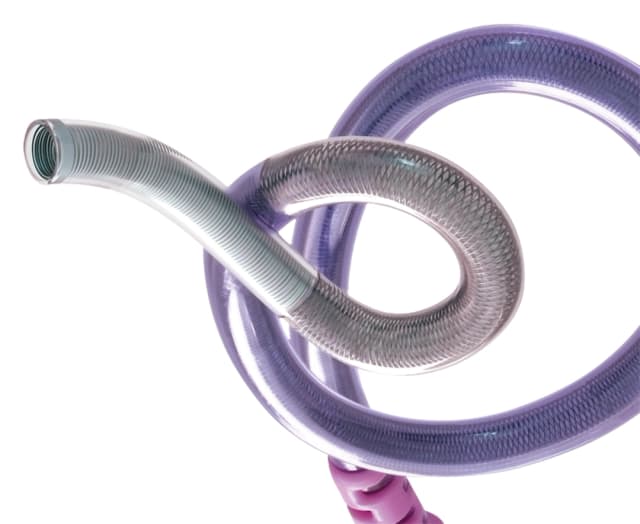
A steerable sheath is an access sheath whose tip can be actively deflected by a control handle, letting the operator dial in the angle needed to present devices coaxially to a target vessel. It provides an adjustable, stable pathway for catheters and devices advanced through it.
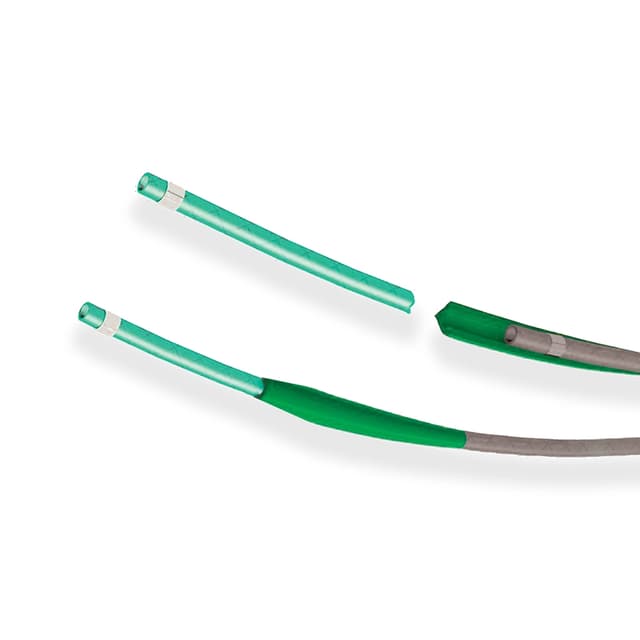
Neurovascular devices treat stroke, cerebral aneurysms, and vascular malformations from inside the blood vessels: stent retrievers remove clots in ischemic stroke, detachable coils and flow modulators treat aneurysms, liquid embolics seal malformations, and microcatheters deliver all of these to the brain.
Generally up to about 6 hours from onset on standard criteria, and in selected patients up to 24 hours when advanced perfusion imaging shows salvageable brain tissue. Because roughly two million neurons are lost per minute of large-vessel occlusion, faster reperfusion means better recovery.