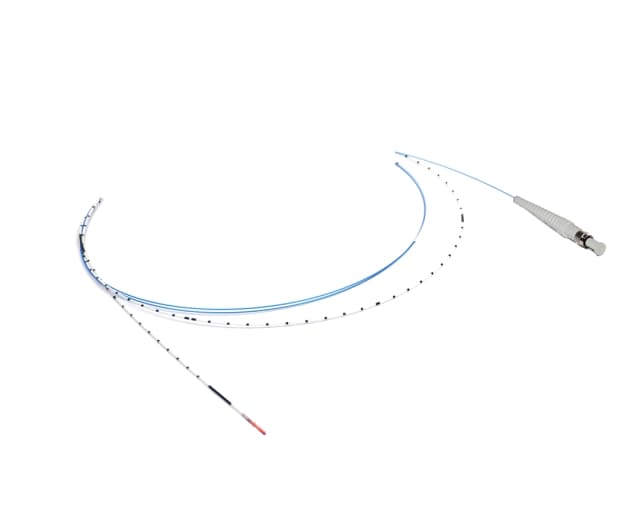
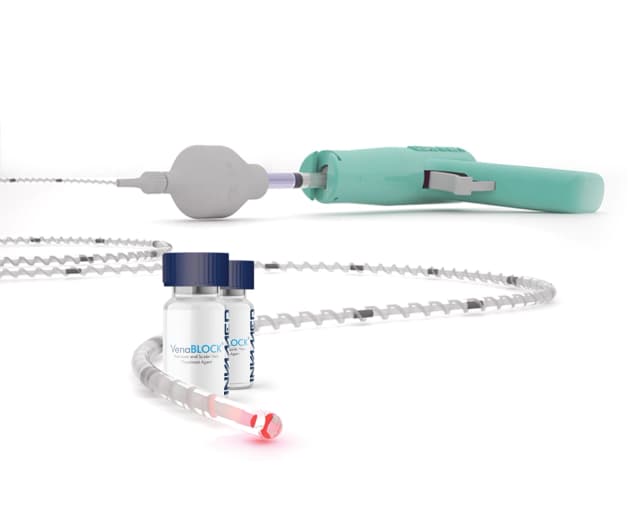
Cyanoacrylate closure uses medical-grade adhesive via catheter to permanently seal incompetent saphenous veins. No tumescent anesthesia or thermal energy needed. INVAMED VenaBLOCK provides non-thermal non-tumescent closure.
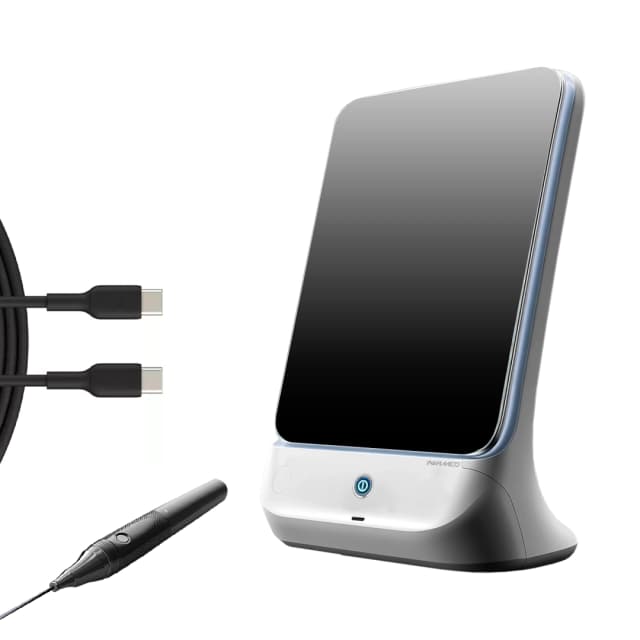
RFA delivers controlled thermal energy via catheter to the vein wall, causing collagen contraction and closure. Performed under tumescent anesthesia with ultrasound guidance.
EVLA uses 1470nm laser energy through a radial fiber to thermally ablate the vein wall. Radial fiber ensures circumferential treatment reducing perforation risk.
A vein closure device permanently seals an incompetent saphenous vein from the inside, redirecting blood to healthy veins. The main closure technologies are thermal ablation (laser or radiofrequency) and non-thermal cyanoacrylate adhesive systems such as VenaBLOCK, all delivered through a single needle puncture.
Both are cyanoacrylate vein closure systems that seal varicose veins with medical adhesive instead of heat. VenaSeal (Medtronic) meters discrete adhesive aliquots with a dispenser gun; VenaBLOCK (INVAMED) applies adhesive continuously through a catheter with an integrated guiding light for tip localization. A 2024 comparative study in International Angiology examined the two systems head-to-head.
All three achieve high closure rates. The biggest practical difference is anesthesia: thermal methods (laser, radiofrequency) need tumescent injections along the leg, while cyanoacrylate adhesive closure needs only the access needle and often no compression stockings. The best choice is matched to vein anatomy and patient priorities.

.webp&w=640&q=75)