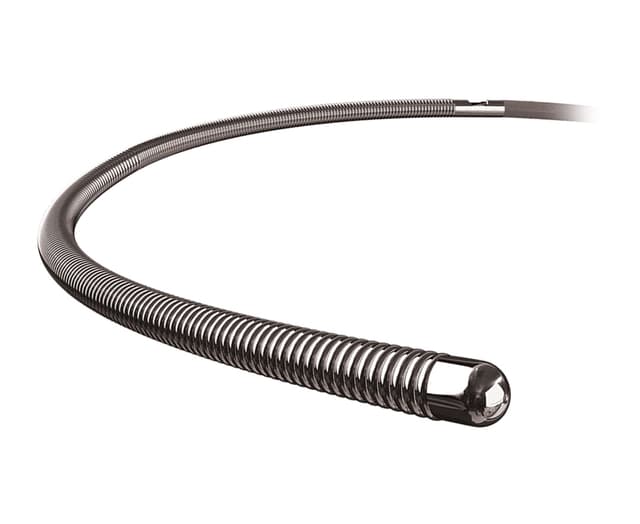
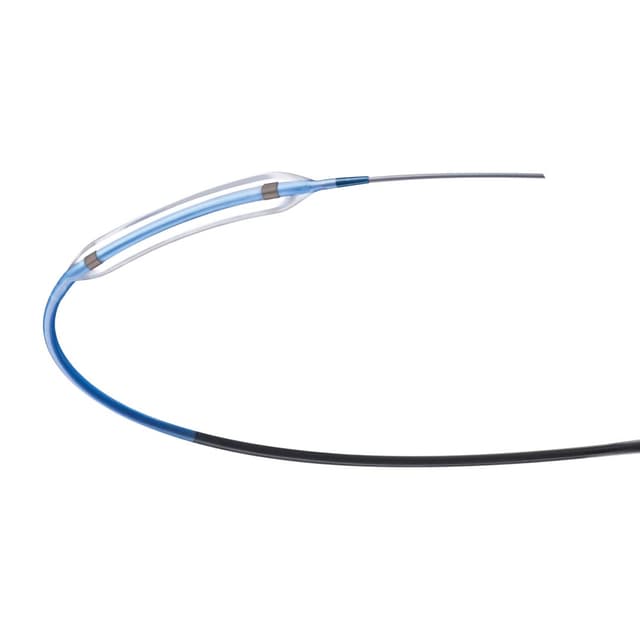
The Jaguar® Braided Long Sheath is a multipurpose catheter system designed to function both as a guiding catheter and an introducer sheath—streamlining vascular access in diagnostic and interventional procedures. Constructed with coil reinforcement, a radiopaque marker, and a hydrophilic distal tip coating, the Jaguar® Sheath facilitates smooth advancement, precise positioning, and robust device compatibility in peripheral, renal, and carotid arteries.
Coil-Reinforced Shaft
Stainless Steel Coil: Embedded within the sheath walls, this coil provides structural integrity and resistance to kinking—even under challenging anatomical angles.
Stable Navigation: Enhances pushability and torque control, ensuring reliable catheter placement through tortuous vasculature.
Radiopaque Marker
5 mm from Distal Tip: A coil-based radiopaque segment ensures clear fluoroscopic visibility, facilitating precise sheath positioning at the target vessel site.
Enhanced Procedural Accuracy: Real-time feedback under X-ray imaging minimizes guesswork and potentially shortens fluoroscopy times.
Hydrophilic Distal Coating
Smooth Entry & Tracking: The distal 5 cm portion is coated with a low-friction hydrophilic layer, reducing vessel wall friction and safeguarding intimal surfaces.
Easier Crossing of Lesions: Helps mitigate navigation resistance in tight or calcified segments—especially beneficial in lower extremity or renal arteries.
PTFE Inner Liner
Low-Friction Lumen: Polytetrafluoroethylene (PTFE) lining decreases internal drag, ensuring efficient passage of devices (e.g., guidewires, balloons, stents).
Reduced Catheter “Kick-Back”: Improves device stability, mitigating back-and-forth movements during manipulations.
High Guidewire Compatibility
Maximum Diameter 0.038” (0.97 mm): Accommodates diverse endovascular devices and ensures synergy with standard or large-caliber guidewires commonly used in peripheral, renal, and carotid interventions.
PE/PEBAX Outer Structure
Proximal Rigidity & Distal Flexibility: The sheath shaft’s polymer blend balances stable push performance with a flexible distal region, promoting safe passage through curved vessels.
Configurable Hemostatic Valve & Dilator
Complete Packaging: Delivers a choice of hemostasis valve styles and a matched dilator, enabling quick setup and effective fluid containment.
Optimized Vessel Access: Minimizes blood loss, secures attachments, and reduces contamination risk.