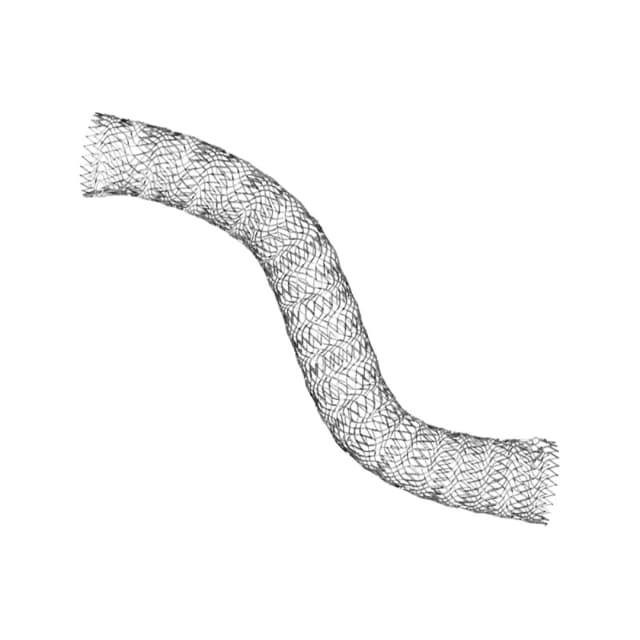
The
Atlas™ Venous Stent, introduced by
Invamed—a
global medical device manufacturer—is meticulously crafted for
venous outflow restoration and
chronic venous insufficiency management. Leveraging a
self-expanding nitinol design,
Atlas™ offers
strong radial force, adaptive conformability, and minimal recoil, supporting
durable patency in challenging venous anatomies.
Delivers consistent radial force to maintain lumen patency, especially in large, compressible venous segments.
Adapts to tortuous or dynamic venous structures (e.g., iliac vein, femoral vein), minimizing stress at stent edges and promoting stable apposition.
Engineered for durable scaffolding, preserving vessel diameter and reducing the risk of stent migration under variable venous pressures.
Large cell design fosters robust flow, reducing intraluminal pressure gradients and supporting potential reduction in venous hypertension symptoms.
Indicated for iliofemoral venous outflow obstructions, post-thrombotic syndrome, or venous stenoses from extrinsic compression or scar tissue.
Severe vessel tortuosity or diameter mismatch preventing stent passage, active local infection in the venous target, or contraindications to endovascular procedures.
Delivers consistent radial force to maintain lumen patency, especially in large, compressible venous segments.
Adapts to tortuous or dynamic venous structures (e.g., iliac vein, femoral vein), minimizing stress at stent edges and promoting stable apposition.
Engineered for durable scaffolding, preserving vessel diameter and reducing the risk of stent migration under variable venous pressures.
Large cell design fosters robust flow, reducing intraluminal pressure gradients and supporting potential reduction in venous hypertension symptoms.
Indicated for obstructions, post-thrombotic syndrome, or venous stenoses from extrinsic compression or scar tissue.
Severe vessel tortuosity or diameter mismatch preventing stent passage, active local infection in the venous target, or contraindications to endovascular procedures.